
Understanding the Connection Between Menopause and Your Oral Health
Menopause is a powerful biological transition that impacts nearly every system in the body. While most women are prepared for hot flashes, mood changes, and sleep disruption, far fewer realize that menopause can dramatically affect their oral health. Hormonal shifts during perimenopause and menopause influence saliva production, gum tissue integrity, bone density, and even how your body responds to oral bacteria.
At Suburban Essex Dental, we frequently see women who are surprised that their new dental symptoms are tied to menopause. Understanding how menopause affects your oral health allows you to take control early, prevent complications, and protect your smile for decades to come.
What Happens to Hormones During Menopause
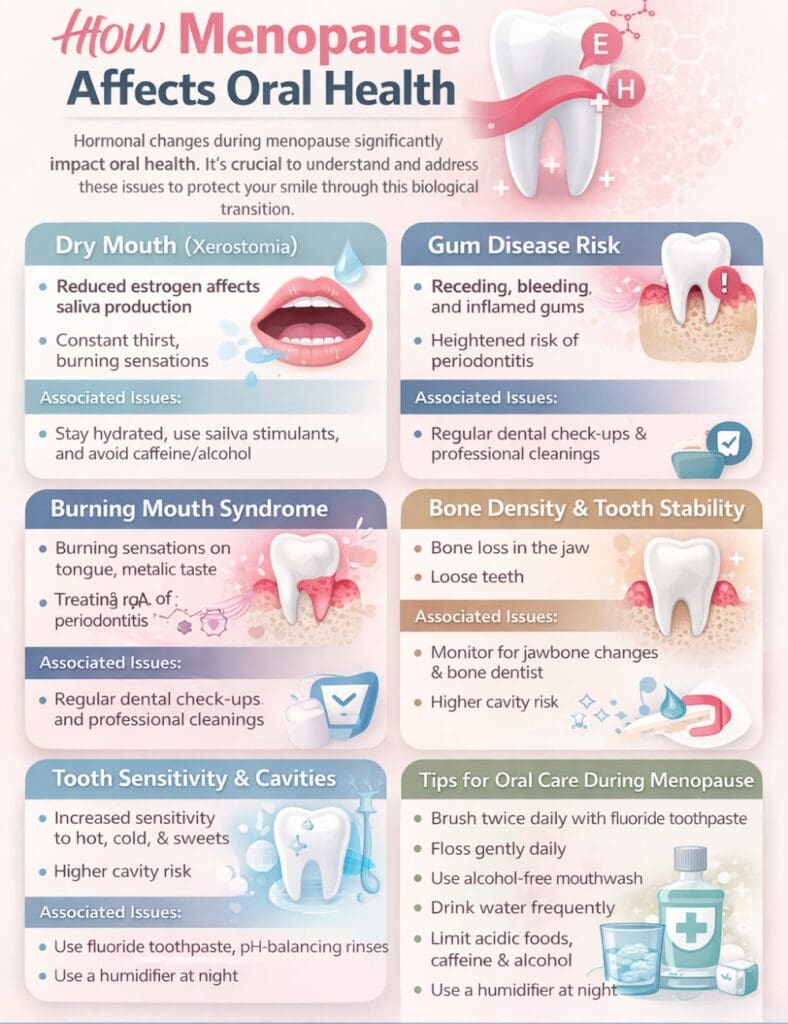
Estrogen plays a protective role in oral tissues. As estrogen levels decline, the body experiences changes in circulation, inflammation control, and bone metabolism. These hormonal shifts affect:
• Blood flow to the gums
• Saliva production
• Jawbone density
• Immune response to bacteria
This explains why many women develop new oral health problems during their 40s, 50s, and beyond — even if they have never had dental issues before.
Dry Mouth and Menopause
Dry mouth, also known as xerostomia, is one of the most common menopause oral health complaints. Estrogen influences the salivary glands. When hormone levels drop, saliva production often decreases.
Saliva is not just moisture. It neutralizes acids, washes away food debris, and controls harmful bacteria. Without enough saliva, the mouth becomes more acidic and vulnerable to decay and infection.
Common symptoms include:
• Constant thirst
• Difficulty swallowing
• Burning or tingling sensations
• Bad breath
• Increased cavities despite good hygiene
Dry mouth menopause symptoms should never be ignored because they dramatically increase the risk of tooth decay and gum disease.
Menopause and Gum Disease Risk
Menopause gum disease is more than a coincidence. Hormonal imbalance makes gum tissue thinner, more sensitive, and less resistant to bacteria. Reduced estrogen also decreases circulation, slowing healing.
Signs of menopause-related gum disease include:
• Red or swollen gums
• Bleeding when brushing or flossing
• Gum recession
• Loose teeth
• Persistent bad breath
Without professional care, this inflammation can progress into periodontitis, which leads to bone loss around the teeth.
Burning Mouth Syndrome and Menopause
Burning mouth syndrome and menopause are conditions many women experience but rarely connect to hormonal changes. It is characterized by:
• Burning, tingling, or scalding sensations on the tongue, lips, or palate
• Altered taste or metallic flavor
• Dry or numb feeling without visible cause
This condition is linked to estrogen deficiency affecting the oral nerve endings. Although it can feel alarming, it is treatable when appropriately addressed by your dentist.
Bone Density Loss and Tooth Stability
Menopause is strongly associated with osteoporosis, and that bone loss does not spare the jaw. As jawbone density decreases, teeth can become loose, shift position, or even fall out.
Menopause teeth problems may include:
• Increased tooth mobility
• Changes in bite alignment
• Ill-fitting dentures or retainers
• Higher implant failure risk without monitoring
Routine dental imaging helps Suburban Essex Dental track jawbone health before problems become severe.
Menopause and Tooth Sensitivity
As estrogen declines, enamel can weaken, and gums may recede, exposing sensitive tooth roots. This results in sudden sensitivity to hot, cold, or sweet foods — even in patients who never experienced discomfort before.
Menopause and Increased Cavity Risk
With reduced saliva and altered oral bacteria, women are more prone to decay during menopause. You may notice cavities forming along the gumline or between teeth — areas that saliva once protected.
Dental care during menopause requires more than brushing twice a day. It requires personalized preventive strategies.
Emotional Health, Stress, and Oral Symptoms
Menopause also brings emotional and neurological changes. Anxiety, sleep disruption, and stress contribute to:
• Teeth grinding (bruxism)
• Jaw clenching
• Headaches and facial pain
• TMJ disorders
Over time, this leads to cracked teeth, enamel wear, and jaw discomfort.
How Suburban Essex Dental Helps Women Through Menopause
At Suburban Essex Dental, we approach menopause dental health with a proactive, compassionate strategy designed specifically for women experiencing hormonal change.
Comprehensive Oral Health Evaluation
Your visit includes a complete assessment of:
• Gum condition
• Saliva flow
• Bone density trends
• Tooth sensitivity
• Existing restorations
This allows us to tailor treatment to the menopause oral health symptoms you are experiencing.
Dry Mouth Treatment Plans
We recommend targeted solutions such as:
• Prescription saliva stimulants
• Hydration protocols
• pH-balancing rinses
• Customized fluoride therapy
Periodontal Monitoring
Early detection of menopause gum disease is critical. We monitor pocket depth, inflammation patterns, and tissue response at every visit.
Burning Mouth Management
We evaluate nutritional deficiencies, nerve sensitivity, and medication side effects that may be contributing to burning mouth syndrome menopause.
Bone Health Collaboration
We coordinate with your physician when osteoporosis affects dental outcomes, especially if implants or extractions are needed.
Daily Oral Care Tips for Women in Menopause
Your home routine is your first line of defense.
Brush twice daily with fluoride toothpaste designed for dry mouth.
Use alcohol-free mouthwash.
Floss gently but consistently.
Drink water frequently.
Avoid acidic and sugary beverages.
Limit caffeine and alcohol, which worsen dry mouth.
Use a humidifier at night if symptoms are severe.
When to Call Suburban Essex Dental
If you are experiencing any menopause oral health symptoms, early care prevents long-term damage.
Call us if you notice:
• Sudden dry mouth
• Burning or tingling sensations
• Bleeding gums
• Tooth sensitivity
• Loose teeth
• Persistent bad breath
Why Menopausal Women Need Specialized Dental Care
Women’s bodies change dramatically during menopause. Treating menopause dental health as routine care ignores the hormonal realities affecting your smile.
At Suburban Essex Dental, we recognize how menopause affects your oral health and adjust every aspect of your care accordingly — from preventive strategies to restorative planning.
Your Smile Deserves Attention at Every Stage
Menopause is not a dental sentence. With the right care, guidance, and support, you can maintain a healthy, confident smile throughout this transition and beyond.
If you’re experiencing dry mouth, gum discomfort, or unexplained changes in your teeth, contact Suburban Essex Dental today to schedule your menopause-focused dental consultation. Your oral health is not just about teeth — it’s about your overall well-being, confidence, and quality of life.