
The Silent Oral Health Crisis Facing Men Today
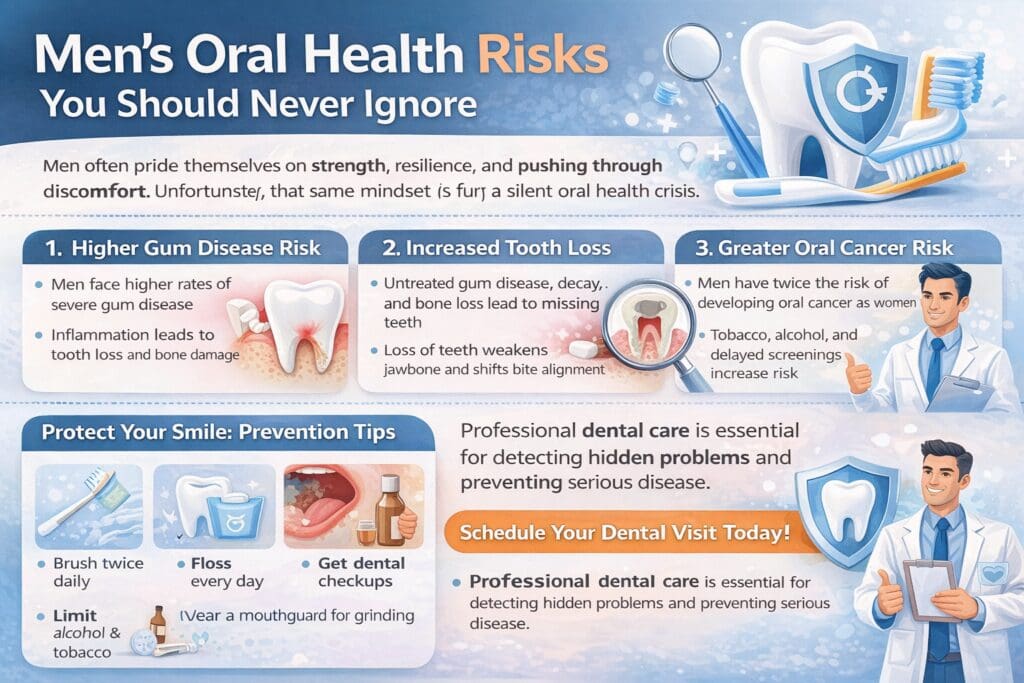
Men often pride themselves on strength, resilience, and pushing through discomfort. Unfortunately, that same mindset is fueling a silent oral health crisis. Across the country, men experience significantly higher rates of gum disease, tooth loss, oral cancer, and untreated decay than women. These problems rarely appear overnight — they build quietly over years of neglected care, skipped cleanings, and ignored symptoms.
Understanding men’s oral health risks you should never ignore can change the trajectory of your smile, your confidence, and even your overall health.
Why Men Are More Likely to Ignore Dental Problems
Research consistently shows that men visit the dentist less often than women and are more likely to delay treatment until pain becomes unbearable. Common reasons why men avoid the dentist are:
• Busy schedules
• Underestimating symptoms
• Fear of dental procedures
• Belief that bleeding gums or bad breath are “normal.”
• Waiting until insurance changes or pain forces action
Unfortunately, dental problems do not resolve on their own. By the time pain appears, damage is often advanced.
Gum Disease: The Leading Cause of Tooth Loss in Men
Gum disease in men is widespread and dangerous. It begins as mild gingivitis — red, swollen gums that bleed when brushing — but progresses into periodontitis, where infection destroys the bone holding your teeth in place.
Symptoms men often ignore:
• Bleeding gums
• Receding gumlines
• Persistent bad breath
• Teeth that feel loose
• Sensitivity to hot or cold
Men are statistically more likely to develop severe periodontal disease due to smoking, inconsistent oral hygiene, and delayed dental care.
Tooth Loss and Jawbone Damage
Tooth loss in men rarely comes from a single cavity. It is usually the result of years of untreated gum disease combined with enamel erosion and bone loss.
Once a tooth is lost, the surrounding jawbone begins to shrink. This changes facial structure, weakens bite alignment, and increases the risk of losing additional teeth.
Men over 40 dental problems often include:
• Multiple missing teeth
• Shifting bite
• Facial collapse appearance
• Difficulty chewing
Oral Cancer Risk Is Higher in Men
Men account for nearly twice as many oral cancer cases as women. Tobacco use, alcohol consumption, and delayed screenings all contribute to this risk.
Early symptoms are subtle:
• Mouth sores that do not heal
• Lumps in the cheek or neck
• Numbness in lips or tongue
• Changes in speech or swallowing
Routine dental visits are often the first place oral cancer is detected.
Men and Chronic Bad Breath
Persistent bad breath is not a hygiene issue — it is a medical warning sign. Gum infection, dry mouth, decaying teeth, and oral bacteria are the true causes.
Dental problems men ignore frequently show up as halitosis long before pain ever appears.
Why Men Over 40 Face Rapid Oral Decline
After age 40, the body’s ability to fight infection weakens. Saliva flow decreases, enamel wears thinner, and gum tissue becomes more fragile.
Men over 40 dental problems accelerate rapidly without consistent professional care. What begins as a small cavity can become root canal therapy or extraction within months.
Stress, Grinding, and Jaw Disorders
Men are more likely to grind or clench their teeth due to stress, often without realizing it. This leads to:
• Cracked teeth
• Worn enamel
• Jaw pain
• Headaches
• TMJ disorders
These problems compound quickly and permanently damage tooth structure.
The Link Between Men’s Oral Health and Overall Health
Poor men’s oral health is directly linked to serious medical conditions, including:
• Heart disease
• Diabetes complications
• Stroke
• Respiratory infections
Gum bacteria enter the bloodstream and trigger inflammation throughout the body. Dental neglect does not stay in the mouth.
The Most Common Men’s Oral Hygiene Habits That Cause Damage
Small habits create big problems:
• Skipping flossing
• Using hard-bristle brushes
• Brushing too aggressively
• Avoiding professional cleanings
• Ignoring minor symptoms
How men can improve dental health starts with changing these daily routines.
How to Protect Your Smile for Life
Prevention is simple when it becomes consistent:
Brush twice daily using fluoride toothpaste
Floss every day
Use alcohol-free mouthwash
Limit sugary drinks
Stay hydrated
Schedule dental visits every six months
These actions stop men’s oral health risks before they escalate.
What Professional Dental Care Does That Home Care Cannot
Your toothbrush cannot remove hardened plaque under the gumline. Only professional cleanings prevent bone loss and tooth mobility.
During regular visits, your dentist checks for:
• Early gum disease
• Oral cancer indicators
• Bite alignment changes
• Cracked teeth
• Enamel wear
This early detection saves thousands in restorative care.
Explore more regarding why Men’s Preventive Dental Care is Vital.
The Confidence Factor
A healthy smile is not vanity — it is personal power. Men who maintain strong oral health report:
• Higher confidence
• Better professional impressions
• Improved social interactions
• Reduced chronic pain
Your smile influences how the world sees you — and how you see yourself.
Take Action Before Problems Become Permanent
Men’s oral health risks you should never ignore are easy to overlook — until they are not. Pain is not the first symptom. Bleeding, dryness, shifting teeth, and persistent odor are your body’s early warnings.
Schedule your dental visit before discomfort forces the decision. Your future health, confidence, and quality of life depend on the choices you make today.
Schedule with Dr. Paul Feldman at Suburban Essex Dental in West Orange, NJ, today.